





Ghanaians may soon face further fuel-pump pressure as global oil prices rise following recent attacks on commercial vessels near the Strait of Hormuz, a crucial shipping corridor that transports roughly 20% of the world’s oil and gas supplies.
The price increase coincides with rising tensions in the Middle East, as Iran has increased strikes across the area in response to continued attacks by the US and Israel.
The insecurity has jolted global energy markets, prompting concerns about supply interruptions.
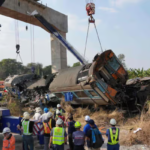
According to the UK Maritime Trade Operations (UKMTO), at least three ships were targeted near the Strait of Hormuz. Two ships were damaged by unknown missiles, creating flames, while another projectile apparently burst extremely close to a third vessel. Authorities said the crew members are safe.
Iran has advised ships to avoid the strait, prompting several to anchor in adjacent waters rather than risk transit. Analysts believe shipping traffic near the strait’s entrance has slowed dramatically due to security concerns and increased insurance prices.
Global oil prices rose more than 10% in early Asian trading on Monday before marginally retreating. Brent crude was trading more than 4% higher at $76.16 a barrel as of 02:00 GMT, while US-traded oil was up around 4% to $69.67.
For Ghana, a net importer of refined petroleum products, continued increases in crude prices could result in higher gasoline prices, higher transportation charges, and upward pressure on food and commodities prices.
Read Also: Pump prices expected to climb again, with fuel up 3.59% and diesel 1.52% in the March window
Energy analysts observe that markets have not yet entered full panic mode, given that key oil production and transportation infrastructure have not been directly attacked.
However, they warn that if the crisis continues and transportation via the Strait of Hormuz is limited, prices may rise above $100 per barrel.
In an effort to stabilize the market, the OPEC+ group, which includes Saudi Arabia and Russia, agreed on Sunday to raise output by 206,000 barrels per day. Some experts, however, worry whether this will be enough to mitigate long-term difficulties.
Meanwhile, Iran’s Islamic Revolutionary Guards Corps (IRGC) stated that three tankers linked to the UK and US had been hit by missiles and were on fire. No country has officially confirmed the claim.
The UKMTO has reported various security issues in the Arabian Gulf and the Gulf of Oman, advising vessels to proceed with caution.
According to ship tracking data, more than 150 tankers have anchored in wide Gulf waters rather than attempting to travel through the straits.
Analysts warn that if the waterway is effectively closed for an extended period, the ramifications for global energy markets and fuel-dependent economies like Ghana’s might be severe.
Source: Citinewsroom









Leave a comment